
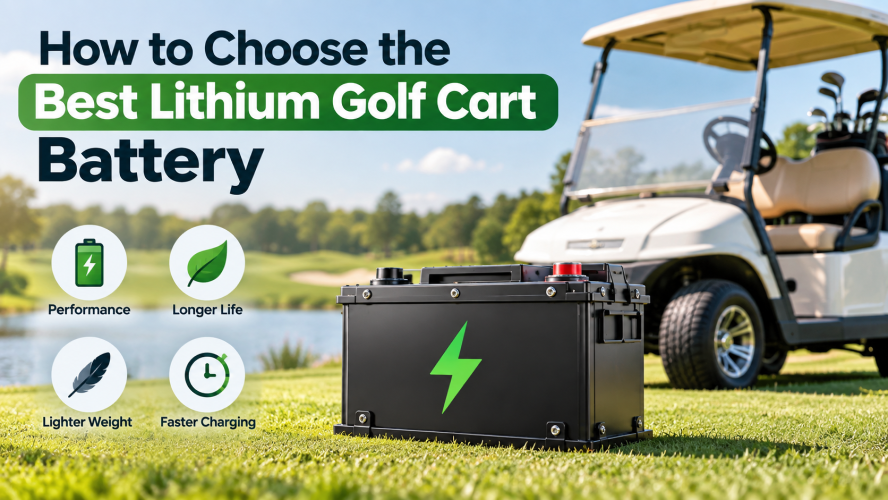
Want longer rides, faster charging, and less battery maintenance? Choosing the right lithium golf cart battery starts with voltage, capacity, size, compatibility, and battery quality. A good battery should match your golf cart’s electrical system while providing enough power and range for your typical driving needs.
Choosing a lithium golf cart battery is easier when you know what actually matters. Not every battery fits every golf cart, and higher capacity does not always mean better performance. You need to match the battery to your cart’s voltage and available space first. Then, consider amp hours, battery chemistry, charging speed, weight, warranty, and safety features. ⚡
⚡ Check Your Golf Cart Voltage First
The first step is finding your golf cart’s required voltage. Most golf carts use a 36V, 48V, or 72V electrical system. Your replacement battery must match the voltage requirements of the cart and its electrical components. Using the wrong voltage can cause poor performance or electrical problems.
Check your existing battery setup, owner’s manual, or manufacturer’s specifications before buying. Older carts may use several lead-acid batteries connected together. A lithium battery can often replace this setup with a single battery pack. However, compatibility should always be confirmed before installation.
| Golf Cart System | Common Lithium Setup | Typical Use |
| 36V | 36V lithium battery | Older or smaller carts |
| 48V | 48V lithium battery | Most modern golf carts |
| 72V | 72V lithium battery | High-performance carts |
🔋 Choose The Right Battery Capacity
Battery capacity affects how far your golf cart can travel between charges. It is usually measured in amp hours (Ah). A higher Ah rating generally provides more usable energy, but your driving conditions also affect range.
Think about how you normally use your cart. Short neighborhood trips require less capacity than long rides on hills or rough terrain. If you frequently carry passengers or climb steep slopes, choosing additional capacity can provide a useful range buffer. 🚗
Before buying, consider:
- How many miles you drive per day
- Number of passengers you carry
- Hills and rough terrain
- Average driving speed
- Weather conditions
- Frequency of charging
🏌️ Consider Your Driving Range
Range is one of the biggest reasons people switch to lithium golf cart batteries. Lithium batteries generally provide more usable energy than traditional lead-acid batteries. However, the advertised range is not guaranteed for every driving situation.
A cart carrying heavy loads will consume more energy. Hills, high speeds, cold weather, tire pressure, and driving habits can also reduce range. Therefore, choose a battery based on your real-world driving needs, rather than relying only on a maximum range claim.
⚙️ Check Battery Size And Installation Space
A powerful battery is useless if it does not physically fit your golf cart. Measure the battery compartment before ordering. Check the battery’s length, width, and height against the manufacturer’s dimensions.
You should also check mounting hardware and cable placement. Some lithium golf cart batteries are designed as direct replacements for specific cart models. Others may require additional components or installation work. 📏
For a smoother installation, verify:
- Battery dimensions
- Terminal location
- Mounting requirements
- Cable length
- Charger compatibility
- Cart-specific compatibility
🔌 Look At Charging Speed And Charger Compatibility
Lithium batteries can charge faster than many traditional lead-acid battery systems. Faster charging can be useful when you use your cart frequently. Instead of waiting through a long charging cycle, you may be able to get back on the course sooner.
The charger is also important. Do not assume your old lead-acid charger is suitable for a lithium battery. Many lithium systems require a charger designed for the battery’s chemistry and voltage. Some batteries include a compatible charger, while others require you to purchase one separately.
🛡️ Check For A Battery Management System
A quality lithium golf cart battery should have a Battery Management System (BMS). The BMS monitors important battery conditions and helps protect the battery during operation and charging.
Depending on the design, protection may include overcharging, over-discharging, excessive current, temperature, and short-circuit protection. These features can help improve safety and battery life. A strong BMS is especially important if you regularly use your golf cart under demanding conditions.
⚡ Compare Battery Power And Performance
Amp hours tell you about capacity, but they do not tell the entire performance story. You should also consider the battery’s continuous discharge current and peak discharge capability. These specifications can affect how the cart performs during acceleration and climbing.
A battery with sufficient discharge capability can provide consistent power when the motor demands more energy. This is particularly useful for carts used on steep roads or with heavy loads. Always compare the battery specifications with your golf cart’s controller and motor requirements.
| Feature | Why It Matters | What To Check |
| Voltage | Matches the cart system | 36V, 48V, or 72V |
| Ah Capacity | Affects available energy | Based on daily driving |
| BMS | Provides battery protection | Protection features |
| Discharge Current | Supports motor demand | Controller requirements |
| Charger | Supports proper charging | Lithium-compatible charger |
🌡️ Think About Battery Temperature Protection
Temperature can affect lithium battery performance and safety. A good battery management system should monitor temperature during charging and use. This becomes especially important when the cart operates in very hot or cold conditions.
Ask the manufacturer about the battery’s operating and charging temperature range. Some batteries include low-temperature charging protection. This can prevent charging when conditions are outside the battery’s safe range.
⚖️ Consider The Battery Weight
One major advantage of lithium golf cart batteries is their lower weight. Lithium packs can be significantly lighter than comparable lead-acid battery banks. Removing excess weight can reduce the overall load carried by the golf cart.
A lighter cart may feel more responsive and can place less demand on the vehicle. It can also make battery installation and replacement easier. However, actual weight savings depend on the specific battery and your original lead-acid setup.
💰 Compare Total Value, Not Just Price
Lithium batteries usually cost more upfront than lead-acid batteries. That does not automatically make them a poor value. You should compare the expected service life, charging efficiency, maintenance needs, warranty, and replacement costs.
A cheaper battery may also have fewer protection features or a shorter warranty. Instead of comparing price alone, look at the total cost of ownership. 💡 A well-built battery can offer better long-term value if it meets your usage requirements.
🏆 Review Warranty And Manufacturer Support
A lithium golf cart battery is a major purchase, so warranty coverage matters. Look for clear information about the warranty period and what it covers. Also check whether the manufacturer provides technical support after purchase.
Pay attention to details such as warranty exclusions, installation requirements, and replacement procedures. A transparent warranty can tell you more about the manufacturer’s confidence in its product. Keep your purchase receipt and installation records when possible.
🔧 Make Sure Your Cart Is Compatible
Compatibility goes beyond battery voltage. Your cart’s motor, controller, charger, wiring, solenoid, and accessories may all affect the installation. Some high-performance carts may require a battery capable of delivering higher current.
Check your golf cart’s make, model, year, voltage, and controller specifications. If you are unsure, ask the battery manufacturer for confirmation before purchasing. This simple step can prevent expensive compatibility problems later.
📋 Use This Lithium Battery Buying Checklist
Before placing your order, compare several important specifications. Avoid choosing a battery based only on marketing claims or a low price. The right battery should fit your cart and your actual driving habits.
Use this quick checklist:
- Voltage: Does it match your golf cart?
- Capacity: Is the Ah rating enough for your trips?
- Dimensions: Will it fit the battery compartment?
- BMS: Does it include suitable protection?
- Discharge: Can it meet motor and controller demand?
- Charger: Is the charger lithium-compatible?
- Warranty: Is coverage clearly explained?
- Support: Can you get help after purchase?
| Buying Factor | Priority | Why |
| Correct Voltage | Essential | Prevents electrical compatibility issues |
| Physical Fit | Essential | Ensures proper installation |
| Capacity | High | Determines available energy |
| BMS Protection | High | Helps protect the battery |
| Warranty | High | Reduces long-term purchase risk |
| Weight | Medium | Can reduce overall cart weight |
| Charging Speed | Medium | Improves convenience |
❓ People Also Ask About Lithium Golf Cart Batteries
How Many Ah Should A Golf Cart Battery Have?
The right Ah rating depends on your cart and driving needs. Higher capacity can provide more available energy for longer trips. Choose based on your expected range, terrain, load, and charging habits.
Are Lithium Batteries Better For Golf Carts?
Lithium batteries offer several benefits, including lower weight, low maintenance, and efficient charging. They can also provide consistent performance throughout much of their discharge cycle. However, the best choice depends on your budget, cart compatibility, and intended use.
Can I Use My Old Charger With Lithium?
You should not assume your old charger will work correctly. Lithium batteries often require a charger with the correct charging profile. Always follow the battery manufacturer’s charger requirements.
How Long Do Lithium Golf Cart Batteries Last?
Service life depends on battery quality, usage, charging habits, temperature, and maintenance. A quality lithium battery can provide many years of service under suitable conditions. Always check the manufacturer’s cycle-life and warranty information.
What Size Lithium Battery Fits My Cart?
The battery must match both the cart’s voltage and available installation space. Measure the battery compartment before purchasing. You should also confirm terminal placement and mounting requirements.
🏁 Conclusion: Choose Based On Your Cart And Driving Needs
Choosing the best lithium golf cart battery starts with compatibility, capacity, and quality. Confirm your cart’s voltage before comparing other specifications. Then evaluate battery size, Ah capacity, discharge power, BMS protection, charger compatibility, weight, and warranty.
Don’t choose simply because a battery has the highest capacity or lowest price. Instead, match the battery to how you actually use your golf cart. The right lithium golf cart battery should provide the range, power, safety, and reliability you need without unnecessary features or costs. ⚡